How to Reset My Circadian Rhythm: Easy 2026 Plan
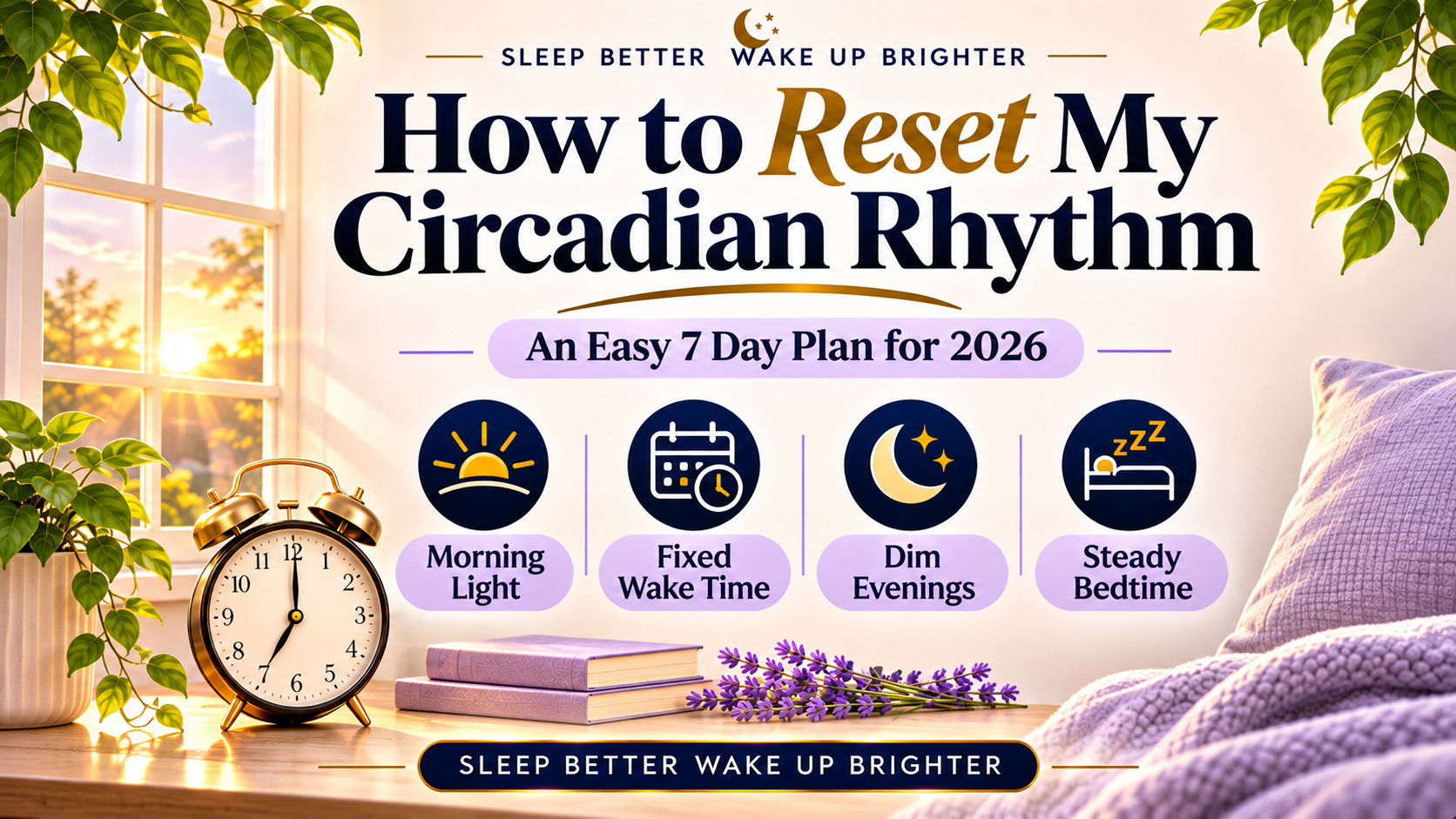
If you have been wondering how to reset my circadian rhythm, this guide gives you a simple 7 day plan that really works.
Key Takeaways
- The 24 hour clock of your body is called your circadian rhythm, and light is the strongest signal.
- Bright light in the morning helps you feel sleepy earlier at night, while bright light late at night pushes your sleep later.
- The key to a circadian rhythm reset is a fixed wake time, even on weekends.
- Make small changes of 15 to 30 minutes to your schedule, rather than making a drastic change.
- Most people are able to reset their body clock in about 1 to 2 weeks.
Introduction
How to reset circadian rhythm? You’re not the only one who has typed that question at 2 a.m., while everyone else is sleeping. Late nights, long screen time, sleep ins on the weekend and travel can all throw your body clock off. The outcome is a bizarre and fatigued combination: wide awake at night, and foggy all morning.
Fortunately, your body clock isn’t broken, and it’s not as difficult as you may think to reset my circadian rhythm. It’s just listening to the cues you give it. Switch the signals and the clock follows. There are only a handful of tools that help reset my circadian rhythm: light, timing and consistency.
In this guide you’ll learn:
- what the circadian rhythm cycle is and how it controls your sleep
- the signs that your body clock is out of sync
- a simple 7 day plan to reset your circadian rhythm
- the best time to get up and go to bed for most adults
This is the most practical guide on how to reset my circadian rhythm in 2026, so let’s get started.
1. What Is the Circadian Rhythm Cycle?
The circadian rhythm cycle is the 24 hour natural cycle that tells your body when to be awake and when to be asleep. It is more than just about sleep. Your body temperature, hunger, hormones and energy levels all go up and down on this daily schedule.
Where is the body clock in the brain?
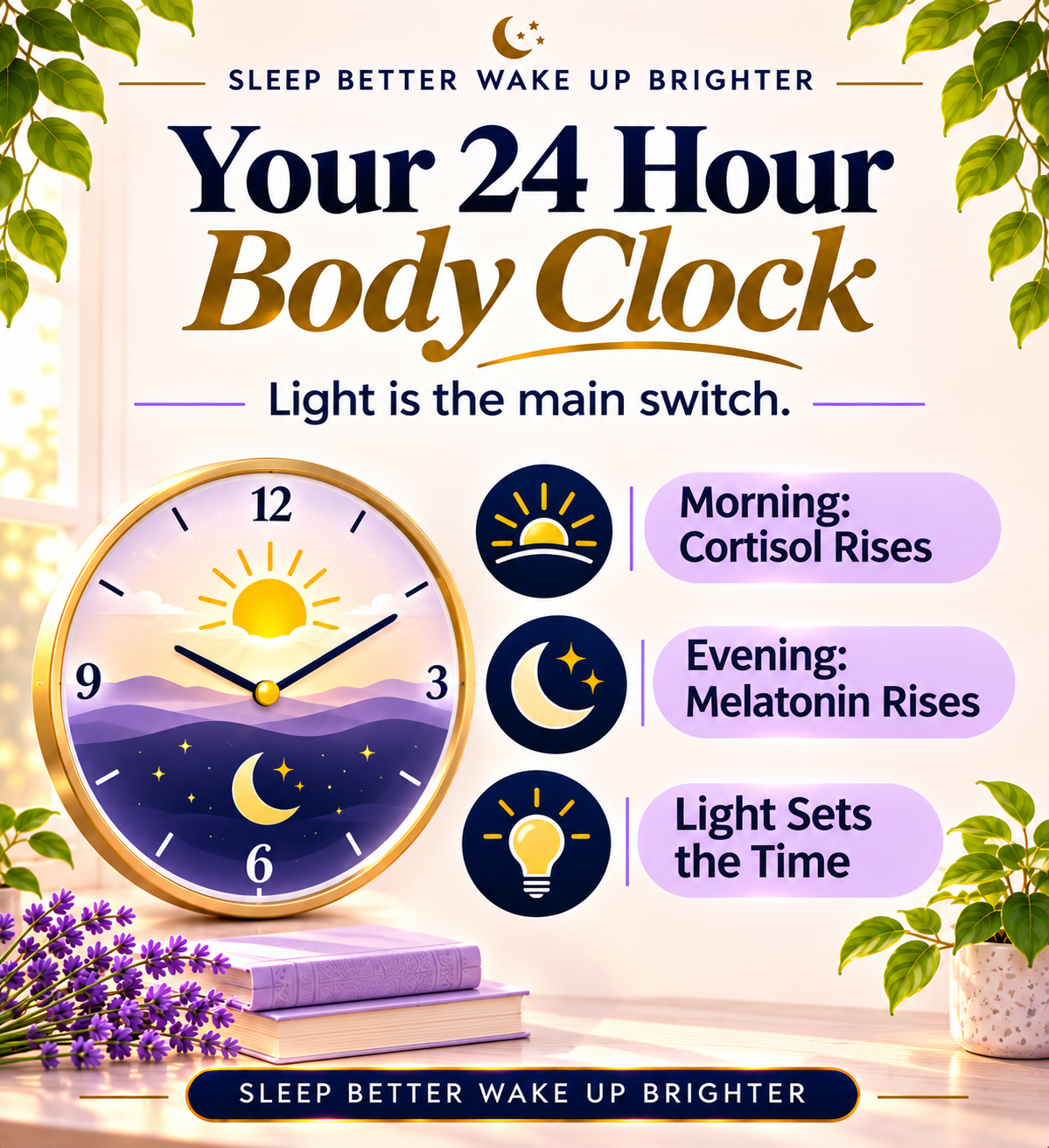
The main body clock is located in a tiny part of the brain known as the SCN. It reads light signals that come in through your eyes and then sets the timing for clocks found in almost every cell of your body. In the morning, it helps release cortisol to wake you up. In the evening, it helps increase melatonin, which makes you sleepy.
What controls the circadian rhythm the most?
The first answer to the question of how to reset circadian rhythm problems is always light. Your circadian rhythm is most influenced by light. Light is the strongest tool we have for keeping our inner clocks in time with the world. Light is the primary switch, although food timing, exercise and daily routine do play a role.
Why do modern habits mess with the clock?
Modern habits throw the clock off because we live upside down from our forefathers. Most of the day is spent indoors in low light, followed by the evening spent under bright screens. In the day, your brain receives weak “daytime” signals, and strong “daytime” signals at night, which confuses it about when to sleep.
2. Signs You Need a Circadian Rhythm Reset
If you keep asking yourself how to reset my circadian rhythm, check these signs first. If you find yourself wide awake at night, sluggish in the morning and without energy during the day, you probably need a circadian rhythm reset. These are the most frequent symptoms.

The 6 most common signs your body clock is out of tune are:
- Even if you feel tired, you can’t get to sleep until very late.
- Mornings are a struggle, and the grogginess lasts for hours.
- You feel tired in the afternoon.
- Your weekend sleep schedule is 2 hours or more later than your weekday schedule.
- You experience hunger at unusual times (late at night).
- After a full night’s sleep, you still feel tired.
The last sign is very frequent. If you are usually exhausted after 8 hours of sleep, our main guide on how to wake up refreshed will tell you the whole story.
What can disrupt the circadian rhythm?
First, it is helpful to understand what could have disrupted my circadian rhythm before I can reset it. The most common causes are late night screen time, irregular sleep times, travel across time zones (jet lag), shift work and eating late at night. Just a couple of late weekends in a row can push your clock later.
3. The Sunrise Reset Method: How to Reset Your Circadian Rhythm
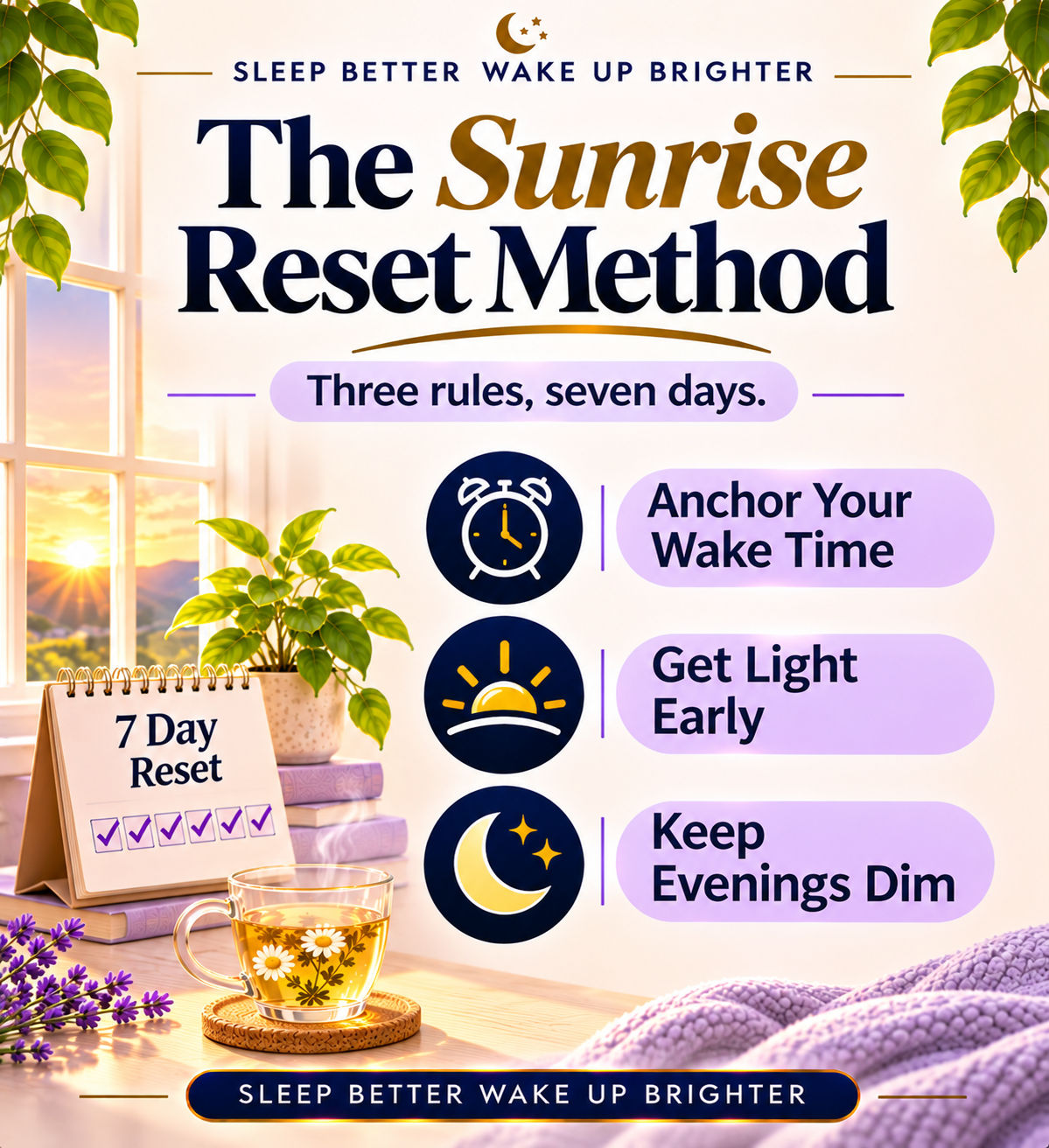
The Sunrise Reset Method is our simple answer to how to reset my circadian rhythm. The Sunrise Reset Method is a straightforward 7 day plan, based on 3 principles: anchor your wake time, get light early, keep evenings dim. These three rules are all that most people need to reset their circadian rhythm, and they must be followed consistently.
Here are the steps to reset my (and your) circadian rhythm:
- Decide on your wake time and stick with it, even on weekends. The most powerful cue for your body clock is a set time to wake up.
- Make small changes to your wake time. If you are currently waking at 9:00, and would like to wake at 7:00, move your wake time 15 to 30 minutes earlier every 2 or 3 days. Large strides are not sustainable.
- Get bright light in the first hour. Open the curtains or go outside immediately after waking up. If you want to wake up earlier, the Sleep Foundation says getting light exposure shortly after waking will help. A study of office workers showed that people who received more light from 8 am to noon fell asleep faster at night.
- Get more daylight in your day. Work near a window, take a walk at lunchtime or have breakfast outside if possible. The more daylight your brain receives during the day, the clearer its signal.
- Turn the lights down 2 hours before bed. Switch to lamps and warm light, and turn screens off 1 hour before bed. Late night bright light pushes your clock later.
- Keep meals and caffeine early. Stop coffee and tea by early afternoon, and have dinner 2 to 3 hours before bedtime. Late caffeine and late meals both trigger “stay awake” signals.
- Go to bed when sleepy, at a steady time. Keep the same bedtime each night. If you cannot sleep after about 20 minutes, get up, sit in dim light and come back when sleepy.
Does camping really reset your body clock?
A camping trip can help reset your body clock, and researchers at the University of Colorado Boulder proved it. Individuals who camped under natural light had earlier body clocks in their studies. It was the morning sun and the dark nights outside that did the job. It’s not necessary to have a tent to achieve the same effect: more daylight and darker evenings at home work on the same principle.
The table below is your daily checklist for resetting my circadian rhythm in one week.
Table: Your 7 Day Sunrise Reset Plan
| Day | Morning | Evening |
|---|---|---|
| Day 1 | Set wake time + 10 minutes of outdoor light | Lamps only after sunset |
| Day 2 | Same wake time + breakfast by a window | No caffeine after 2 pm |
| Day 3 | Wake up 15 minutes earlier + morning walk | No screens 1 hour before bed |
| Day 4 | Same wake time + 15 minutes of light | Dinner 3 hours before bed |
| Day 5 | Wake time another 15 minutes earlier | Calm winding down routine |
| Day 6 | Same wake time, even if it is the weekend | Same bedtime as weekdays |
| Day 7 | Review: are you feeling sleepy sooner? | Keep what works |
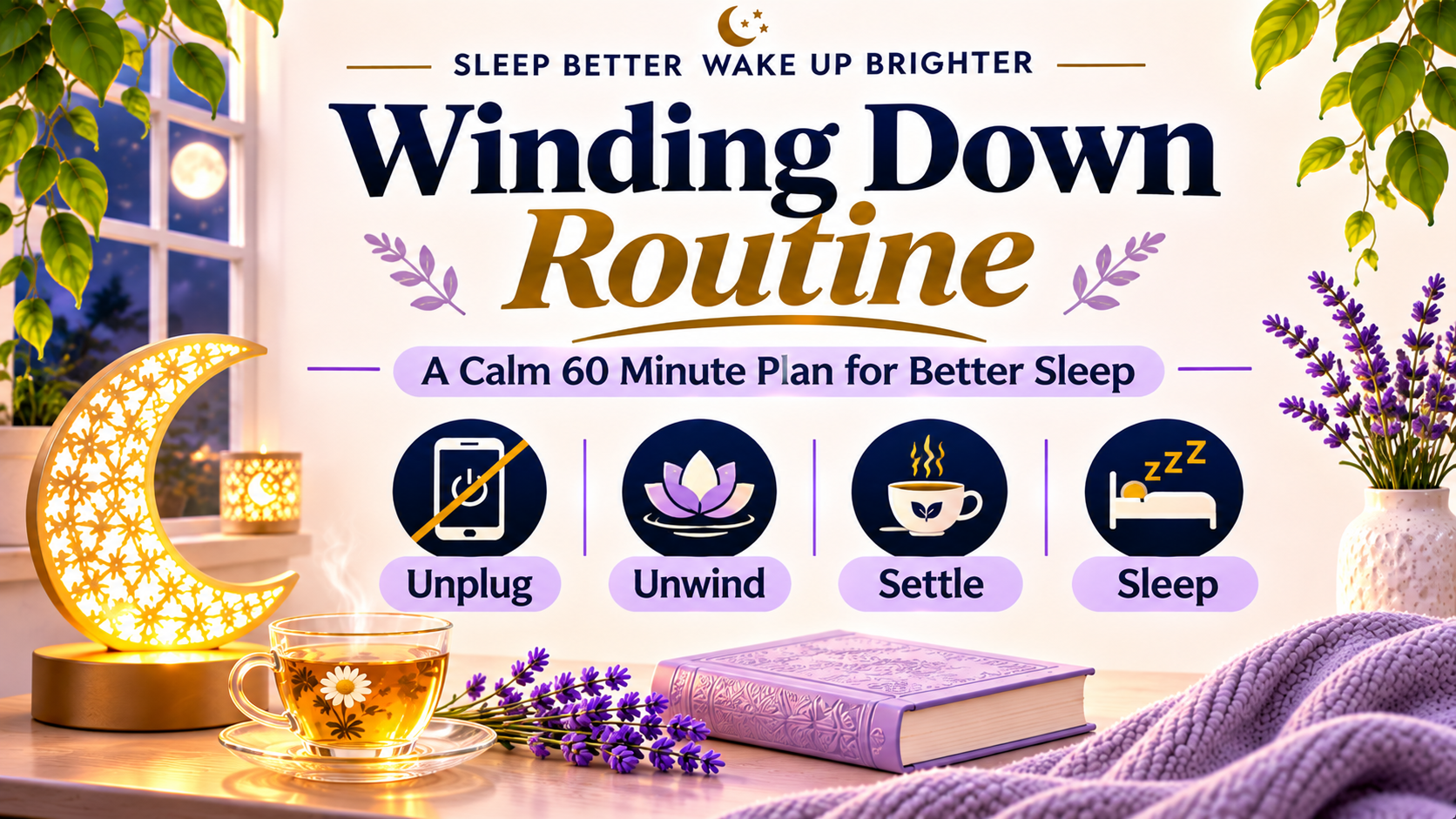
To help make your evening easier, try our guide to a calm winding down routine.
4. Best Time to Sleep and Wake Up
When people ask how to reset my circadian rhythm, timing comes first. The ideal time to sleep and wake is the one that you can maintain each day while getting 7 or more hours of sleep. For most adults, a bedtime between 10 pm and 11 pm and a wake time between 6 am and 7 am aligns well with natural light.

How much sleep do adults need?
Adults should sleep at least 7 hours a night, according to the CDC. Others require more like 8 or 9. If you need an alarm in the morning but still feel tired, you probably need more.
Is there such a thing as a night owl or an early bird?
Yes, people have different natural timing, known as a chronotype. Early birds feel sleepy early and night owls feel sleepy later. Light and routine can help you adjust your schedule, but if you’re a strong night owl, you might always feel best on a slightly later schedule.
Table: Bedtime and Wake Time Examples
| Wake Up Time | Bedtime for 7.5 Hours of Sleep | Bedtime for 9 Hours of Sleep |
|---|---|---|
| 6:00 AM | 10:15 PM | 8:45 PM |
| 6:30 AM | 10:45 PM | 9:15 PM |
| 7:00 AM | 11:15 PM | 9:45 PM |
| 7:30 AM | 11:45 PM | 10:15 PM |
These times include approximately 15 minutes to get to sleep. Sleep moves in cycles of about 90 minutes, so these times help you wake near the end of a cycle. To understand what those cycles look like on a tracker, read our guide to the normal sleep cycle graph on Apple Watch.
5. Common Mistakes When Resetting Your Body Clock
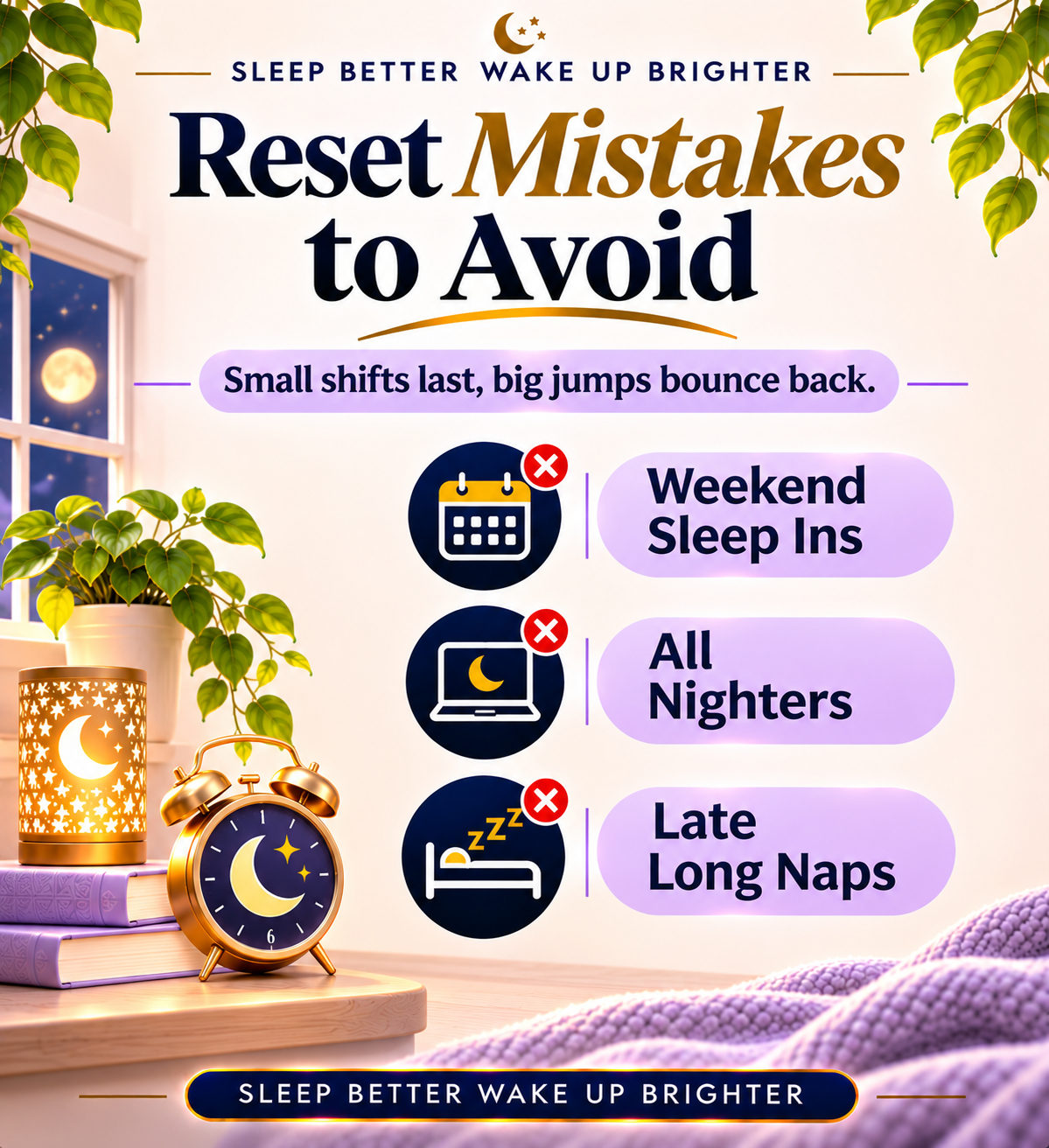
Learning how to reset my circadian rhythm also means knowing what not to do. The most common pitfalls when resetting your circadian rhythm are changing too much at once, sleeping in on weekends and getting bright light at night. Here are some things to steer clear of:
Is it a bad idea to sleep in on weekends?
Sleeping in on weekends can undo the hard work. Sleeping two or three hours later on Saturday and Sunday will cause your body clock to adjust to a later time, and Monday morning will feel like jet lag. Try to keep weekend wake times within an hour of weekdays.
Should I try to reset my sleep by pulling an all nighter?
No, all nighters aren’t a good way to reset sleep. It makes you feel exhausted, can cause a long nap and can further disrupt your schedule. Small, steady changes work better.
Can naps be a hindrance to a circadian rhythm reset?
Naps that are too long or too late in the day can make it difficult to go to sleep at night. Take a nap if needed, about 20 minutes and before mid afternoon.
Here are 5 things to keep in mind:
- “Your body clock isn’t broken. It just needs clearer signals.”
- “Morning light pulls your night earlier.”
- “The wake time is the anchor; the bedtime comes afterwards.”
- “Little changes stay, big changes rebound.”
- “Your weekend sleep in is a very small time zone hop.”
6. How Long Does It Take to Reset Your Circadian Rhythm?
The next question after how to reset my circadian rhythm is how long it takes. With consistent routines, it typically takes 1 to 2 weeks to reset your circadian rhythm. 15 to 30 minutes of change a few days at a time can really add up.
How much time does it take to get my circadian rhythm right again?
It will take most people two weeks of consistency to get into the new routine and a month of consistency to make it automatic.
How quickly can light reset the body clock?
Light can shift the body clock a little every day. This is how the steady approach works: a fixed wake time and morning light, repeated daily, move your clock earlier step by step.
When should you see a doctor?
If you still have trouble even after a couple of weeks of regular habits, if you fall asleep at unsafe times during the day, or if you snore or stop breathing while you are asleep, consult a doctor. Some people have circadian rhythm sleep disorders which require professional care.
7. FAQ
How do I reset my circadian rhythm quickly?
The quickest way to reset my circadian rhythm is to maintain a consistent wake time, get bright light immediately after waking, and have a dim evening. Real change will be seen in approximately 1 to 2 weeks.
Is it possible to reset my circadian rhythm in one day?
Not fully. While one day of good habits helps, your body clock will take several days of repeated signals to get into a new rhythm.
What is the most effective light to reset my body clock?
Natural daylight is best. Outside light is much brighter than inside light, even on a cloudy day.
Can melatonin be used to reset the circadian rhythm?
Melatonin may be used for jet lag or sleep timing issues, but it is a supplement that can interact with other medications. Do not use it without medical or pharmacist advice.
What is a circadian rhythm reset?
A circadian rhythm reset is a process of shifting your body clock back to a healthy, regular schedule, with the help of light, timing and routine.
Quick Summary
- Light is the primary switch of your body clock, which runs on a 24 hour cycle.
- Set one wake time every day, including weekends.
- Get good light in the morning and keep the light dim at night.
- Make small changes in your schedule (15 to 30 minutes at a time).
- A reset usually takes about 1 to 2 weeks.



Post Comment