How to Wake Up Refreshed: 2026 Proven Guide
Key Takeaways
- The night before the alarm goes off is when you learn how to get up refreshed.
- Sleep quality is as important as sleep hours, and this is why many people are still feeling tired after eight hours of sleep.
- Sleep inertia (morning grogginess) is around 16 minutes long on average for adults.
- If you wake at the end of a 90 minute sleep cycle, at the same time each day, mornings will be much easier.
- Your body clock turns on in the first 30 minutes with bright light, water and movement.
Introduction
Picture this. It’s 6:30 am and you’re woken up. You slept for nearly 8 hours, you went to sleep at a proper time, you did everything properly. But your head is heavy, your eyes won’t open and the snooze button feels like a friend.
If this is your morning, you are not alone. A 2020 survey cited by WHOOP found that 65% of Americans do not feel rested and energized when they wake up. So the question is not “Why me?” The question is how to get up each day without fighting with your body to get it to function properly.
The bright side of this is that getting a good night’s sleep is a skill, and skills can be taught. There are three factors that affect your energy in the morning: what you do in the evening, how you sleep your night, and what you do in the first half hour you are awake.
In this guide you’ll learn:
- why you might still feel tired after 8 hours of sleep
- the Three Window Wake Up Method, a simple strategy for a better morning
- a 10 step plan, a bedtime timing table and a 7 day reset plan
It’s the most complete how to wake up refreshed guide for 2026, so grab a cup of water and let’s get started.
1. What Does It Mean to Wake Up Refreshed?
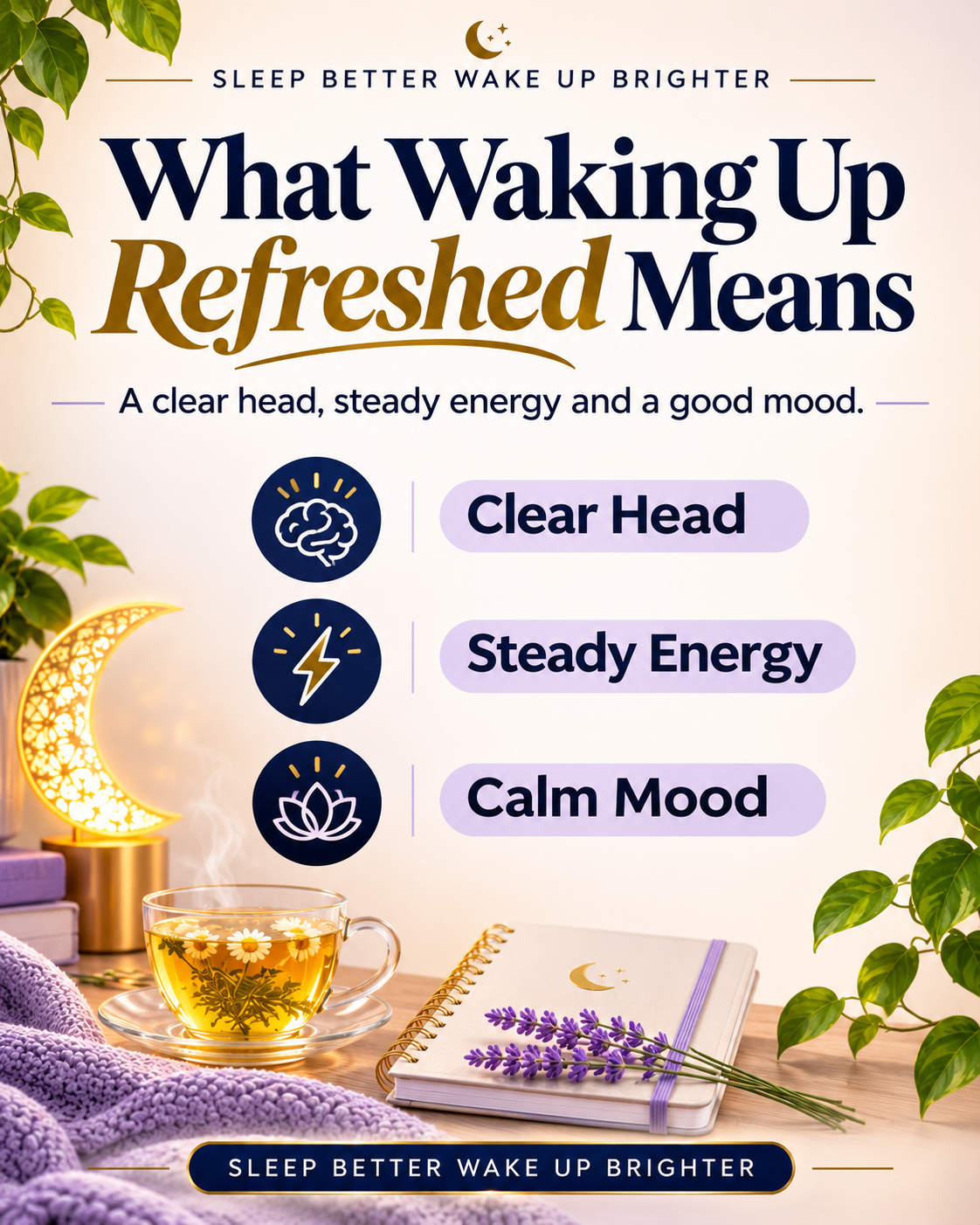
Waking up refreshed is waking up with a clear mind, a steady energy and a positive mood until morning. It doesn’t mean getting out of bed like a cartoon character. It means your body feels rejuvenated and your brain is able to focus in just a few minutes.
To understand how to wake up feeling fresh, it’s helpful to know a little about the small, hazy divide between sleep and full alertness.
What is sleep inertia?
Sleep inertia is the groggy, slow feeling that occurs immediately after waking. Why that is: your brain does not flip from sleep to wake like a light switch. Some regions are quick to wake up and others remain in a drowsy state for a period of time.
Sleep inertia is a brief period of grogginess and reduced alertness that occurs when a person awakens from sleep. It is a normal state between sleep and wakefulness and happens all the time, researchers say.
How long is too long for grogginess in the morning?
Most adults will recover from grogginess in about 15 minutes. A 2026 study, published in PLOS One, polled 2,355 Korean adults, aged 19 to 92, and discovered that the average time to feel better in the morning after waking up was 15.8 minutes, with women experiencing a bit more grogginess than men.
Lab studies indicate that brain fog following a night’s sleep may take up to 1.5 hours to completely dissipate, particularly for those who are sleep deprived. So, if it is foggy all morning, this is a signal to take note of.
Why is it that some people get up feeling better and others do not?
Some people wake up refreshed because their sleep timing matches their body clock. The 2026 study also revealed that evening types (night owls) reported longer grogginess in the morning, whereas morning types reported shorter grogginess in the morning. The researchers also discovered that anxiety had the strongest association with long grogginess, even after they factored in sleep hours and chronotype.
It’s a great concept for anyone who wants to understand how to get up energized: your morning energy isn’t just in your pillow. It’s about your clock, your stress and your habits.
2. Why Am I Still Tired After 8 Hours of Sleep?
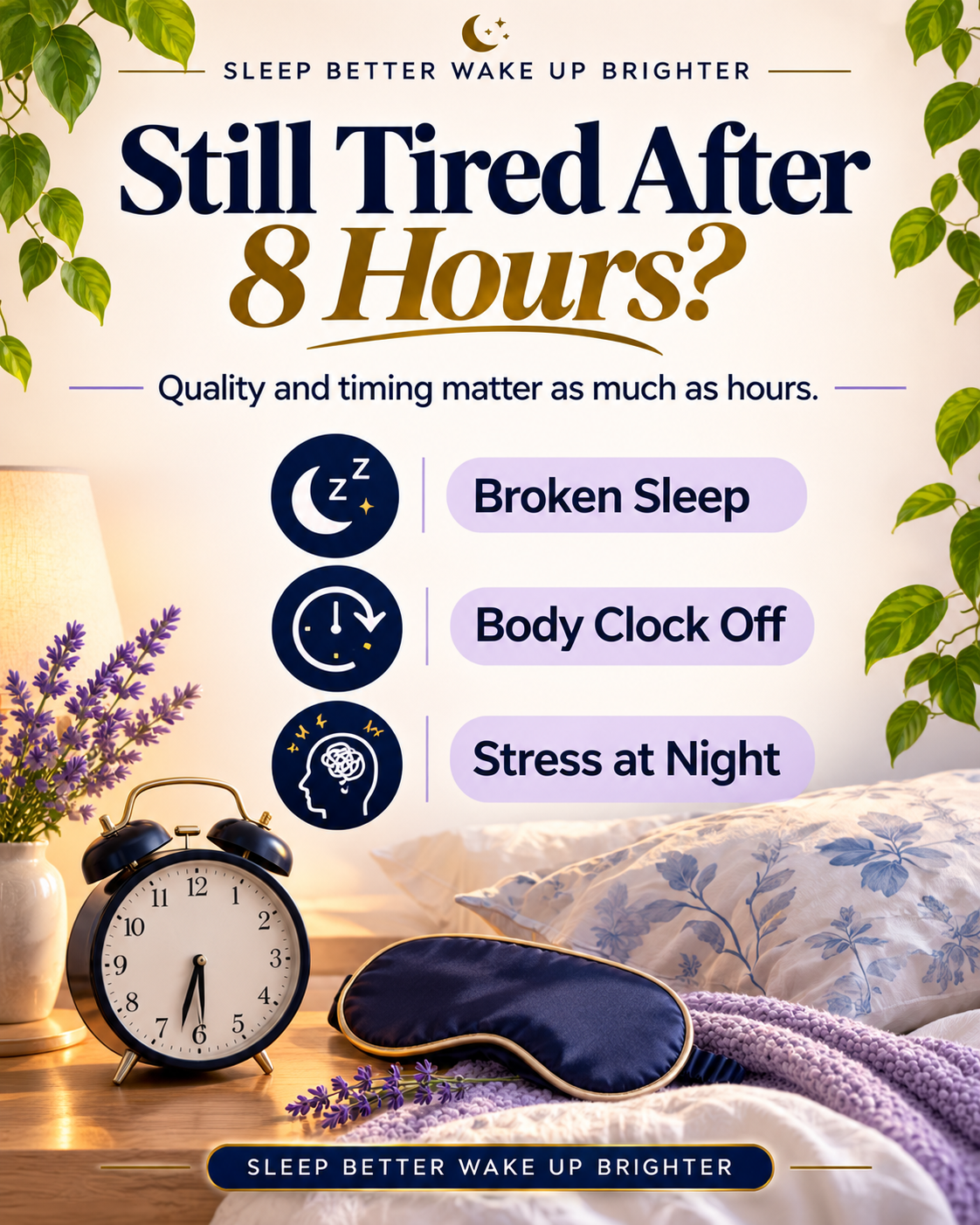
Why am I still feeling tired after 8 hours of sleep? The most frequent response is that sleep quality and sleep timing are as important as sleep hours. Here’s why: 8 hours in bed does not equal 8 hours of well timed, deep, unbroken sleep.
First, let’s consider the most common causes of people feeling tired after 8 hours of sleep, since you can’t fix how to feel refreshed after 8 hours of sleep until you know what is draining you.
Is it the quality of sleep or quantity of sleep?
The quality of sleep is typically more important than people realize. When your sleep is interrupted by noise, a hot room, your partner’s snoring or frequent trips to the bathroom, your brain never experiences long periods of deep sleep. You can get 8 hours of sleep and feel like you only had 5.
The amount of sleep is also important, as not everyone needs exactly 8 hours. The CDC says adults need at least 7 hours of sleep a day, and some people require closer to 9 hours.
Does your body clock make you feel sleepy?
Yes, a misaligned body clock can leave you feeling fatigued after a night’s sleep. If you sleep from 1:00 to 9:00 on weekends and 11:00 to 7:00 on weekdays, you are living in two time zones. This is known as social jet lag, according to sleep experts.
Could waking up in deep sleep be the problem?
One of the major causes of grogginess is waking from deep sleep. The Sleep Foundation says that we feel most refreshed when we wake in light sleep (stage one or two), and waking from slow wave sleep can make us groggy.
Does stress impact on your feeling refreshed?
Worry and stress can cause you to feel exhausted after a long night’s sleep. A busy mind keeps the body on alert and sleep is lighter and more broken. In the 2026 PLOS One study, anxiety was the factor most strongly linked to long morning grogginess.
When does fatigue become a health problem?
If you are still tired after 8 hours of sleep, it may be a sign of a health problem. Sleep apnea, thyroid issues, low iron or anemia, low vitamin B12 and depression are all common things doctors check. If you experience any of the following symptoms, you should discuss this with your doctor: loud snoring, gasping at night, morning headaches or tiredness for weeks.
The table below provides a quick overview of the most frequent causes of “why am I still tired after sleeping 8 hours?”
Table: Common Reasons You Feel Tired After 8 Hours of Sleep
| Reason | Warning Sign | What to Try |
|---|---|---|
| Broken sleep | You wake up several times at night | Cool, dark, quiet bedroom |
| Body clock out of sync | Weekend wake time is 2+ hours later | Same wake time 7 days a week |
| Waking in deep sleep | Heavy feeling at the alarm | Time your alarm with 90 minute cycles |
| Insufficient sleep | Must use an alarm and still feel tired | Bedtime 15 to 30 minutes earlier |
| Stress or worry | Racing thoughts in bed | A calm winding down routine |
| Late caffeine | Trouble falling asleep | No coffee or tea after 2:00 |
| Possible health issue | Loud snoring, gasping, tiredness for weeks | Speak with a doctor |
3. The Three Window Wake Up Method
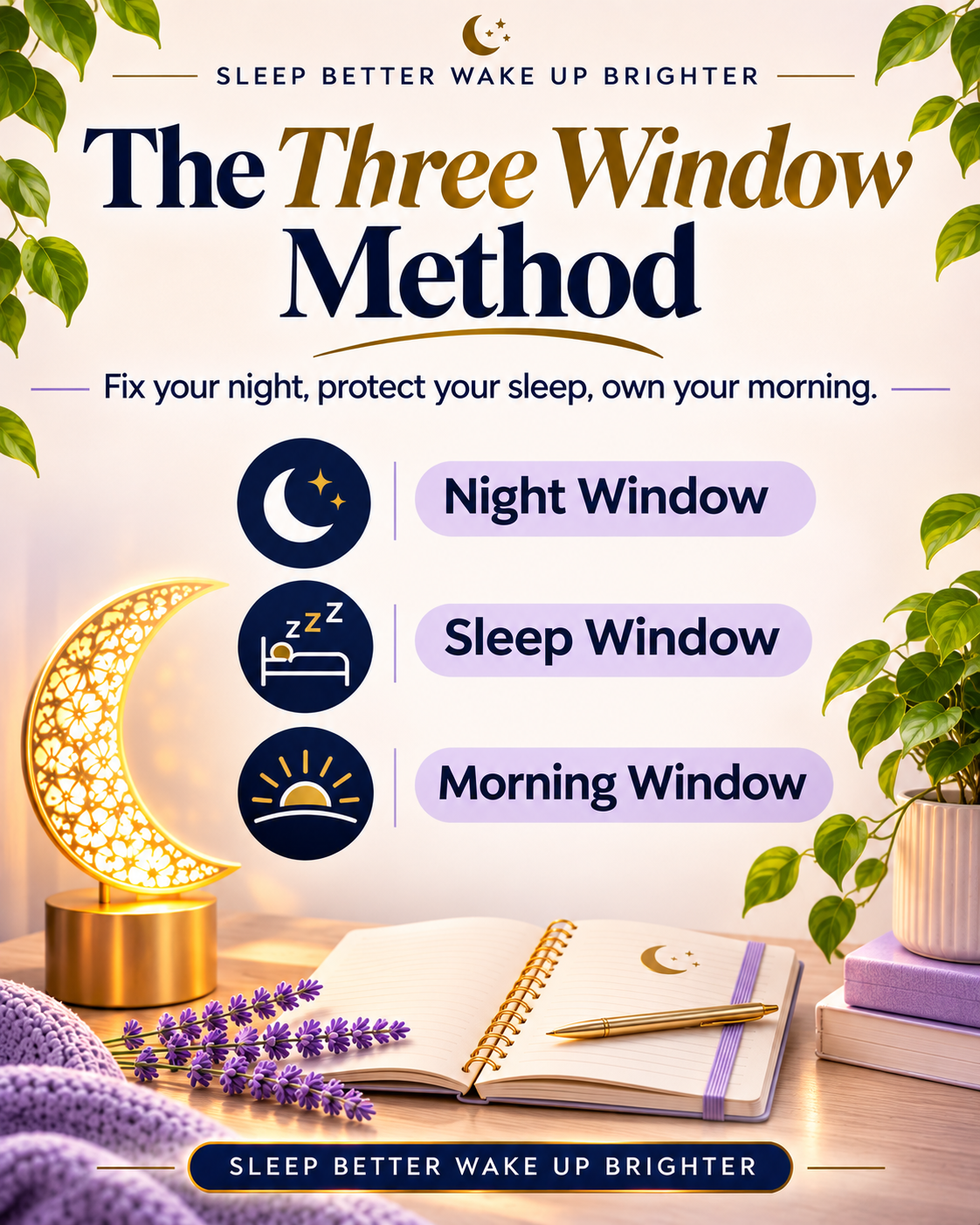
The Three Window Wake Up Method is described as a simple system that divides your day into three windows, which determine how rested you will feel in the morning: the Night Window, the Sleep Window and the Morning Window.
When people talk about how to get a good night’s sleep, the web offers you a random list of tips. This approach arranges those tips in order, so that you can always tell which one to work on first.
Window 1: The Night Window (last 60 minutes before sleep)
The hour before bed is called the Night Window and it determines how quickly you fall asleep. Your task in this window is to reduce light, reduce noise and reduce stress. Turn the lights down, put your phone on the charger outside the bedroom and engage in a slow activity such as reading, light stretching or writing tomorrow’s to do list.
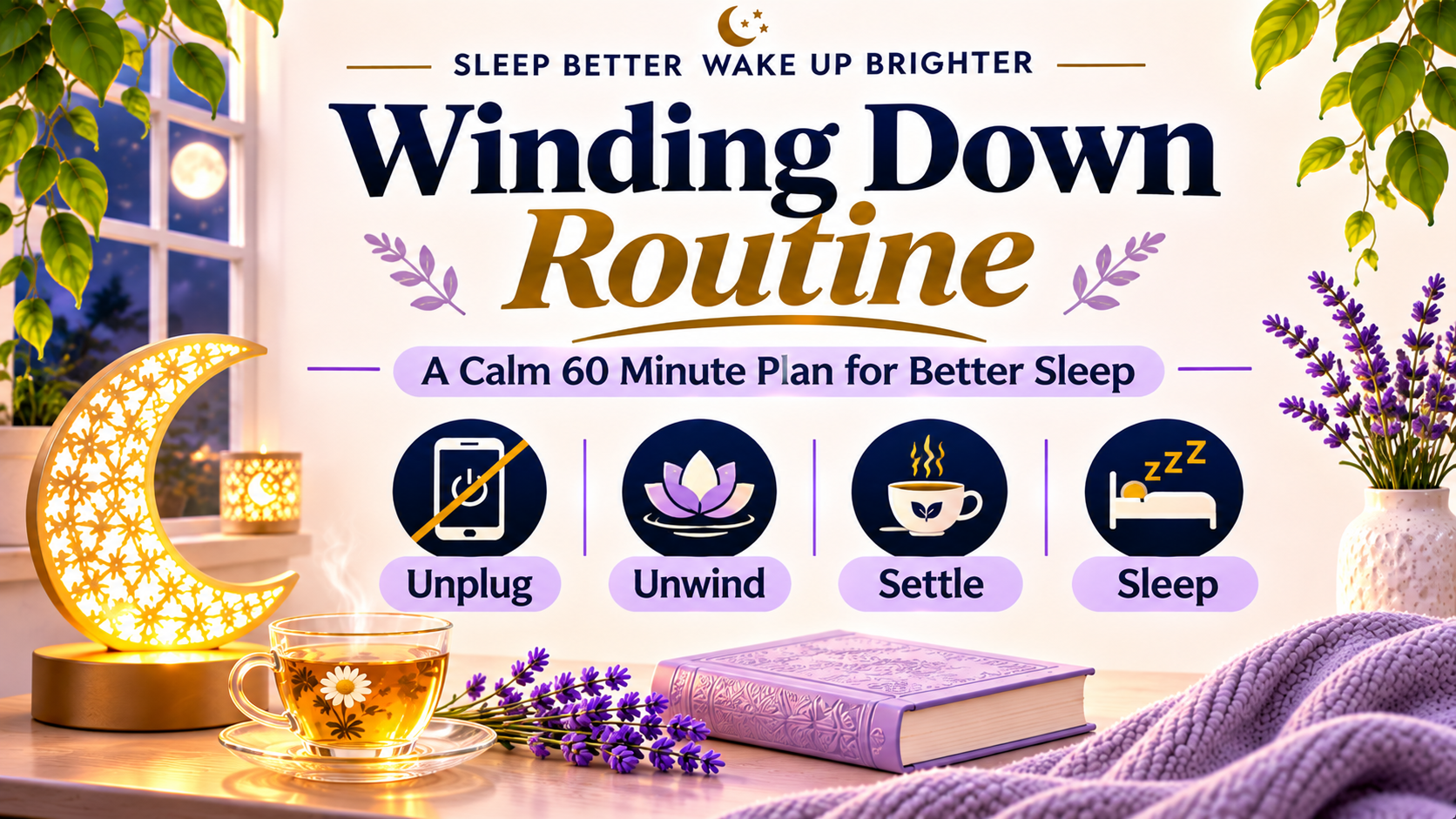
Winding Down Routine
How you spend the last hour before bed decides how you feel when the alarm rings. Your body cannot jump from a bright screen and a busy mind straight into deep, restful sleep. It needs a slow and gentle signal that the day is over. A calm winding down routine gives it that signal. Dim the lights, put your phone away, take a warm shower, read a few pages or write down tomorrow’s tasks so your mind can let go. Do the same small steps in the same order every night and your body starts to expect sleep. Read our full winding down routine guide to build an evening that leads to a fresh morning.
Window 2: The Sleep Window (time in bed)
The Sleep Window is the time you are asleep and it determines the quality of your sleep. In this place, three things are of paramount importance: sufficient time, regular timing, and a cool, dark and quiet bedroom.
You also have cycles of sleep. For a healthy night on a tracker, refer to our guide to the normal sleep cycle graph on Apple Watch.
Window 3: The Morning Window (first 30 minutes awake)
The first 30 minutes after waking up is the Morning Window, and it determines how quickly the grogginess subsides. The three tools you have here are light, water and movement. This is also the time when your body clock is programmed for the following night.
The one thing to remember: fix the Night Window first, protect the Sleep Window second, and use the Morning Window to lock in your progress.
4. How to Wake Up Refreshed: 10 Science Based Steps

Here are 10 steps to waking up feeling refreshed. Maintain a consistent routine, turn off screens before bed, sleep in 90 minute increments and incorporate light and movement immediately after waking. This is the complete procedure.
The top 10 tips to waking up feeling refreshed are:
- Choose one wake time and stick with it daily. Your body clock is based on a fixed wake time. Keep it within 30 minutes on weekends as well.
- Count backwards to set your bedtime. Most adults require 7 hours of sleep or more, so if you wake up at 6:30, try to fall asleep by 11:00 at the latest.
- Avoid caffeine after 2pm. Caffeine stays in your system for 5 to 7 hours, so if you have a cup of coffee at 2pm, you still have half of it in your system at 7pm.
- Have dinner 2 to 3 hours before bed. A full dinner will keep your tummy occupied when your body is trying to sleep.
- Start the Night Window 60 minutes before bedtime. Lower the lights, put away the laptop and move to more relaxed activities.
- Make the bedroom cool, dark and quiet. Blackout curtains at night, a fan or white noise (if necessary), and a comfortable pillow.
- Set an alarm that fits your sleep cycles. Use the timing table in the next section to wake up at the end of a cycle.
- Get up at the first alarm. The Sleep Foundation says that broken sleep is not as rejuvenating, so it recommends waking to the first alarm rather than hitting snooze.
- Get bright light within 30 minutes. Open the curtains or go outside. Getting at least 10 minutes of natural light in the morning will help keep your internal body clock in sync.
- Drink water and move your body. A glass of water and two minutes of stretching tell your body the day has begun.
What is the quickest way to wake up in the morning feeling refreshed?
Bright light and movement is the quickest remedy for feeling awake. Opening the curtains and strolling around for a couple of minutes is a much more effective way to break the sleep inertia than lying in bed and scrolling your phone.
Should you get up naturally or with an alarm?
Waking up naturally is ideal when you are learning how to wake up refreshed, because it usually means you had enough sleep and woke during light sleep. If you need an alarm every single day and still feel exhausted, your bedtime is probably too late.
5. Sleep Cycles, Your Body Clock and Waking Up Refreshed
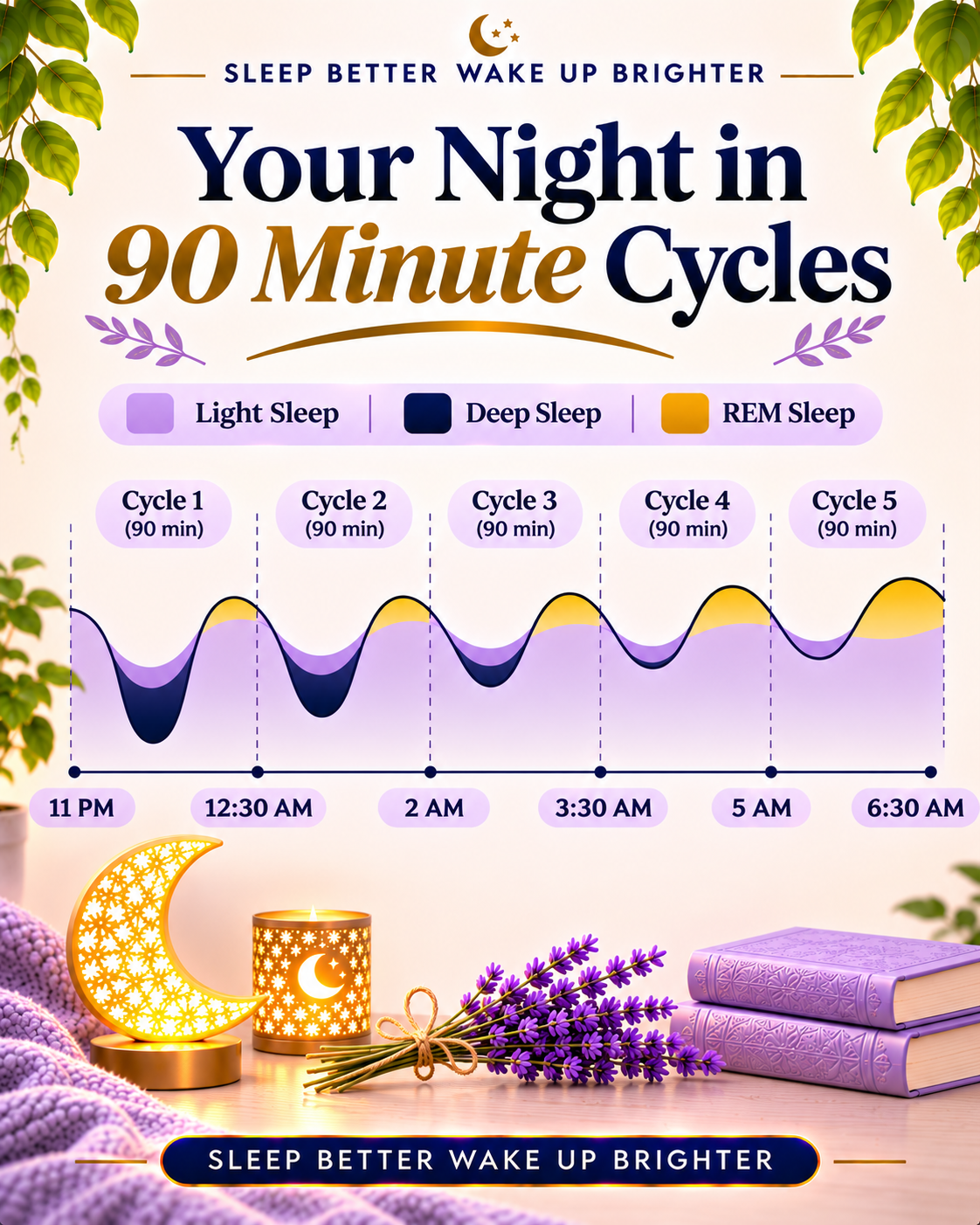
The secret to waking up feeling refreshed is sleep cycles and your body clock. When you know how to do it, mornings don’t have to be a battle.
How long does a sleep cycle take?
Normal Sleep Cycle Graph on Apple Watch
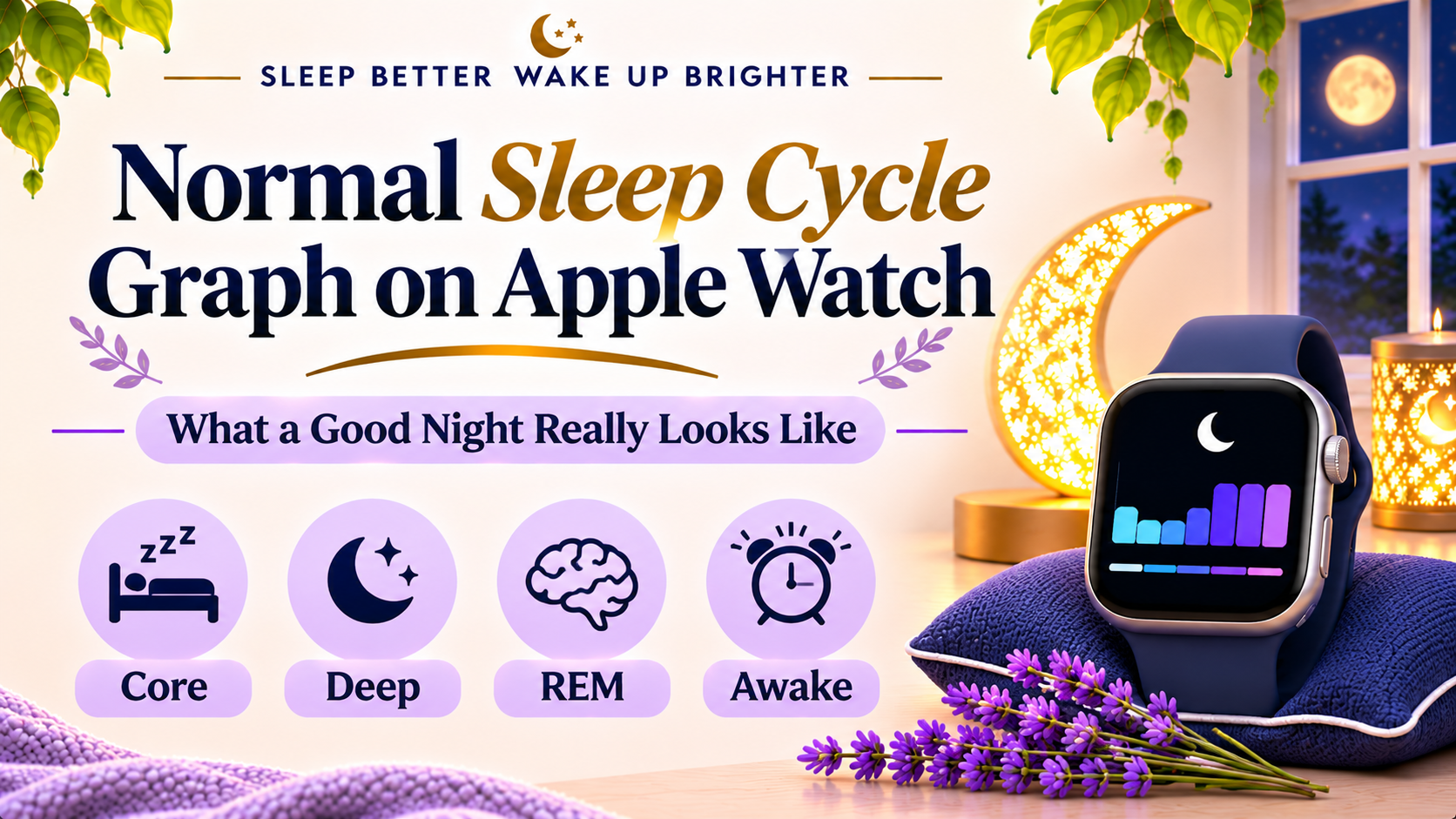
If you wear an Apple Watch, you already have a simple tool that shows what happens while you sleep. The sleep graph splits your night into Awake, REM, Core and Deep sleep, each with its own color. Many people open the Sleep app, see a lot of awake bars or short deep sleep, and start to worry. In most cases the night is perfectly normal. A healthy graph has several cycles, more deep sleep early in the night and more REM sleep near the morning. Our guide on the normal sleep cycle graph on Apple Watch explains what each color means, how much of each stage is normal and what a good night looks like.
Most adults have a sleep cycle of approximately 90 minutes. Sleep is in cycles, typically 90 minutes, passing through light sleep, deep sleep and REM sleep. There are typically 4 to 6 cycles per full night.
A sleep cycle is one complete sleep period, including light sleep, deep sleep and REM sleep. It is easier to wake at the end of a sleep cycle than in the middle of a deep sleep cycle.
When should I go to bed to wake up refreshed?
Try to go to bed at a time that allows you five or six 90 minute cycles before your alarm, and about 15 minutes to fall asleep. The table below will do the calculations for you.
Table: Bedtime Guide to Wake Up Refreshed (5 or 6 Sleep Cycles)
| Wake Up Time | Bedtime for 6 Cycles (9 hours) | Bedtime for 5 Cycles (7.5 hours) |
|---|---|---|
| 6:00 AM | 8:45 PM | 10:15 PM |
| 6:30 AM | 9:15 PM | 10:45 PM |
| 7:00 AM | 9:45 PM | 11:15 PM |
| 7:30 AM | 10:15 PM | 11:45 PM |
| 8:00 AM | 10:45 PM | 12:15 AM |
Tip: these times include about 15 minutes to fall asleep. Each person is unique, so try moving 15 minutes either way and see how you feel.
What is the timekeeping mechanism in the body?
The circadian rhythm is your body’s internal clock, the 24 hour clock of your body telling you when you should feel sleepy and when you should feel alert. The small brain area known as the SCN is light sensitive and dark sensitive, and it releases cortisol in the morning and melatonin in the evening.
So how do I get my body clock back in line?
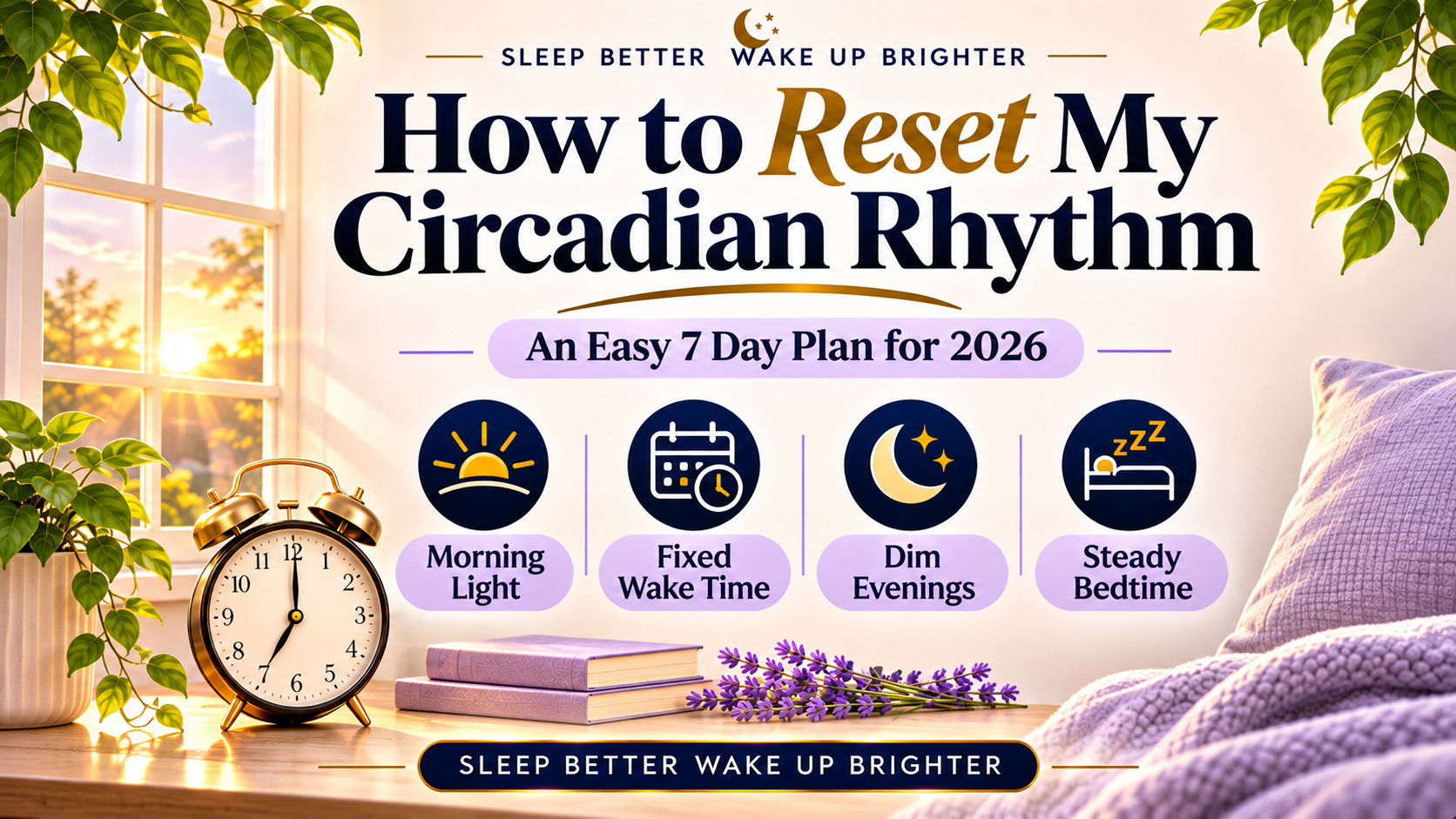
How to Reset My Circadian Rhythm
If you wake up tired no matter how many hours you sleep, your body clock may be out of balance. Late nights, weekend lie ins, night screens and travel can all push your inner clock away from the sun. The good news is that it can be moved back. Your body listens to light, meal times and a steady wake time more than anything else. Getting bright morning light, keeping the same wake time every day and shifting your bedtime by small steps can bring your rhythm back on track within one or two weeks. Our guide on how to reset my circadian rhythm shows you a simple step by step plan to do it.
Set your body clock with a fixed time for waking up, morning light and dim evenings. A difference is noticed by most people within 1 to 2 weeks. If you want to go through the process step by step, check out our guide on how to reset my circadian rhythm.
6. Morning Habits That Help You Wake Up Feeling Refreshed
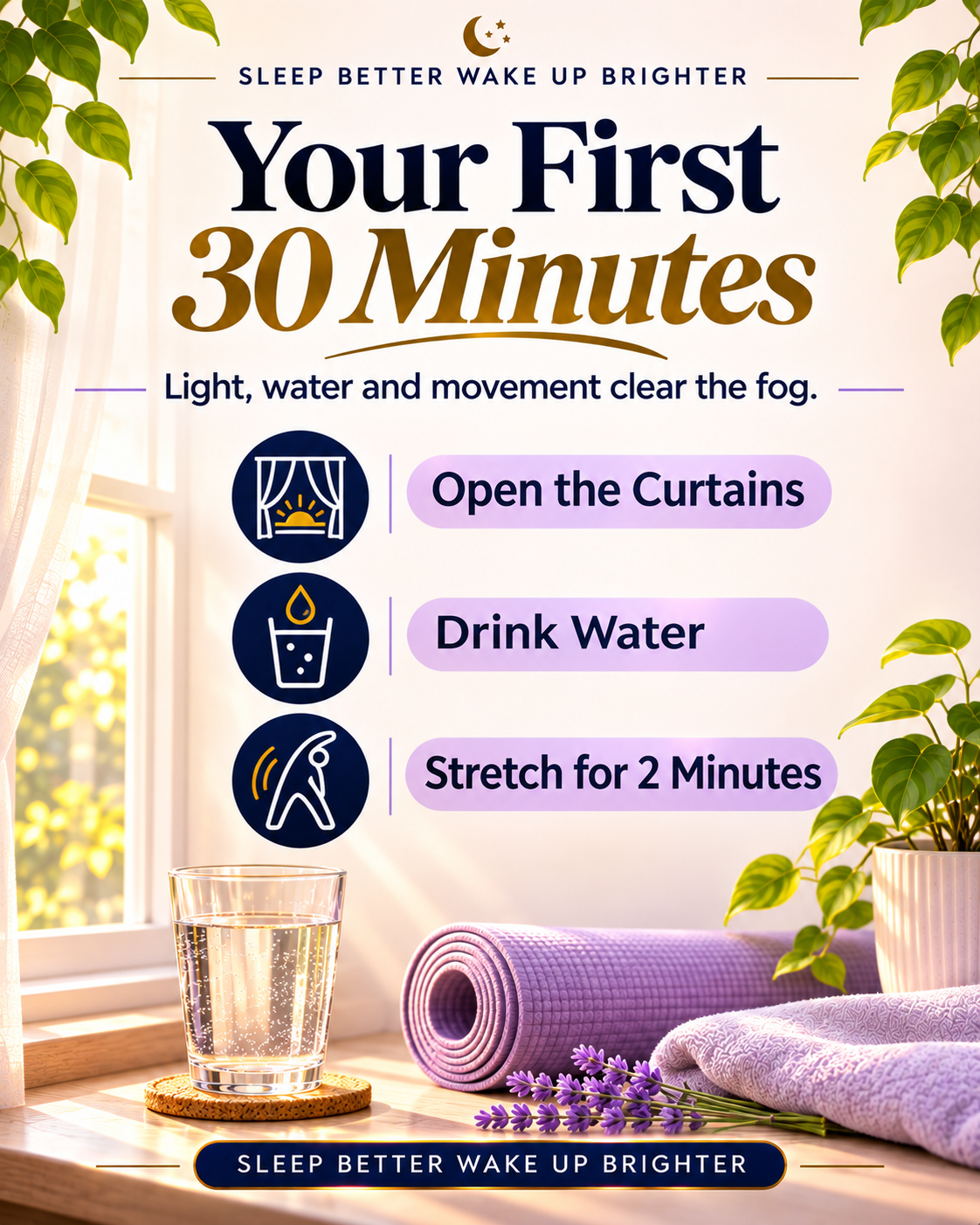
The process of waking up feeling rested doesn’t stop as soon as you open your eyes. The first 30 minutes can make the fog dissolve or last longer.
Why is it that morning light is so beneficial?
The morning light helps as it is the strongest signal your body clock gets. Light tells your brain to stop releasing sleep hormones and start the day. Go outside or to a bright window right after waking for 10 to 30 minutes.
Should I drink water when I wake up?
Yes, a glass of water is a simple and helpful first step. You don’t drink water at night, so it’s a simple way to help your body get going.
Is there any benefit to a morning stretch?
A morning stretch is effective because it increases your heart rate and blood flow slowly. You don’t have to have a full workout. Just 2 to 5 minutes of stretching or a short walk will help to get you energized.
Is breakfast really essential for getting the day going?
A well rounded breakfast will help you maintain your energy level throughout the day. Combine protein and fibre, such as eggs and whole grain toast or yogurt and fruit, rather than just sugary foods that cause a quick energy drop.
What should you avoid in the first 30 minutes?
Avoid hitting snooze, lying in a dark room and scrolling your phone in bed. These habits leave your brain in a semi conscious state, and make it more difficult to wake up feeling fresh.
Table: Morning Habits That Help vs. Habits That Hurt
| Helps You Wake Up Refreshed | Makes Mornings Harder |
|---|---|
| Rising at the first alarm | Snoozing the alarm 3 times |
| Opening curtains immediately | Staying in a dark room |
| A glass of water | Coffee before any water |
| Two minutes of stretching | Scrolling your phone in bed |
| Protein and fibre breakfast | Sugary snacks only |
7. Our Analysis: What Most Guides on Waking Up Refreshed Miss

We analyzed 11 pages that rank on Google for “how to wake up refreshed” and “still tired after 8 hours of sleep” in November 2026, including sleep brand guides, hospital and health blog guides.
What we observed:
- Almost all guides give the same advice for the morning: no snooze, light, drink water.
- Very few provide actual numbers on sleep inertia, so the reader has no idea what “normal” grogginess feels like.
- Most guides fail to note that the 2026 PLOS One study found anxiety to be most strongly linked to long morning grogginess.
- Most guides provide tips in a random order, and there is no easy way to determine which tip to fix first.
That’s why this guide is using the Three Window Wake Up Method. If you get your evening right, your sleep will be easier, and if your sleep is easier, your morning will be easier.
Here are 5 ideas to keep in mind:
- “Your morning energy is determined the night before.”
- “Eight hours in bed does not equal eight hours of good sleep.”
- “The anchor of a steady body clock is a steady wake time.”
- “The snooze button provides you with more sleep, but less quality sleep.”
- “Light is the quickest coffee your body clock is aware of.”
8. Your 7 Day Plan to Wake Up Refreshed
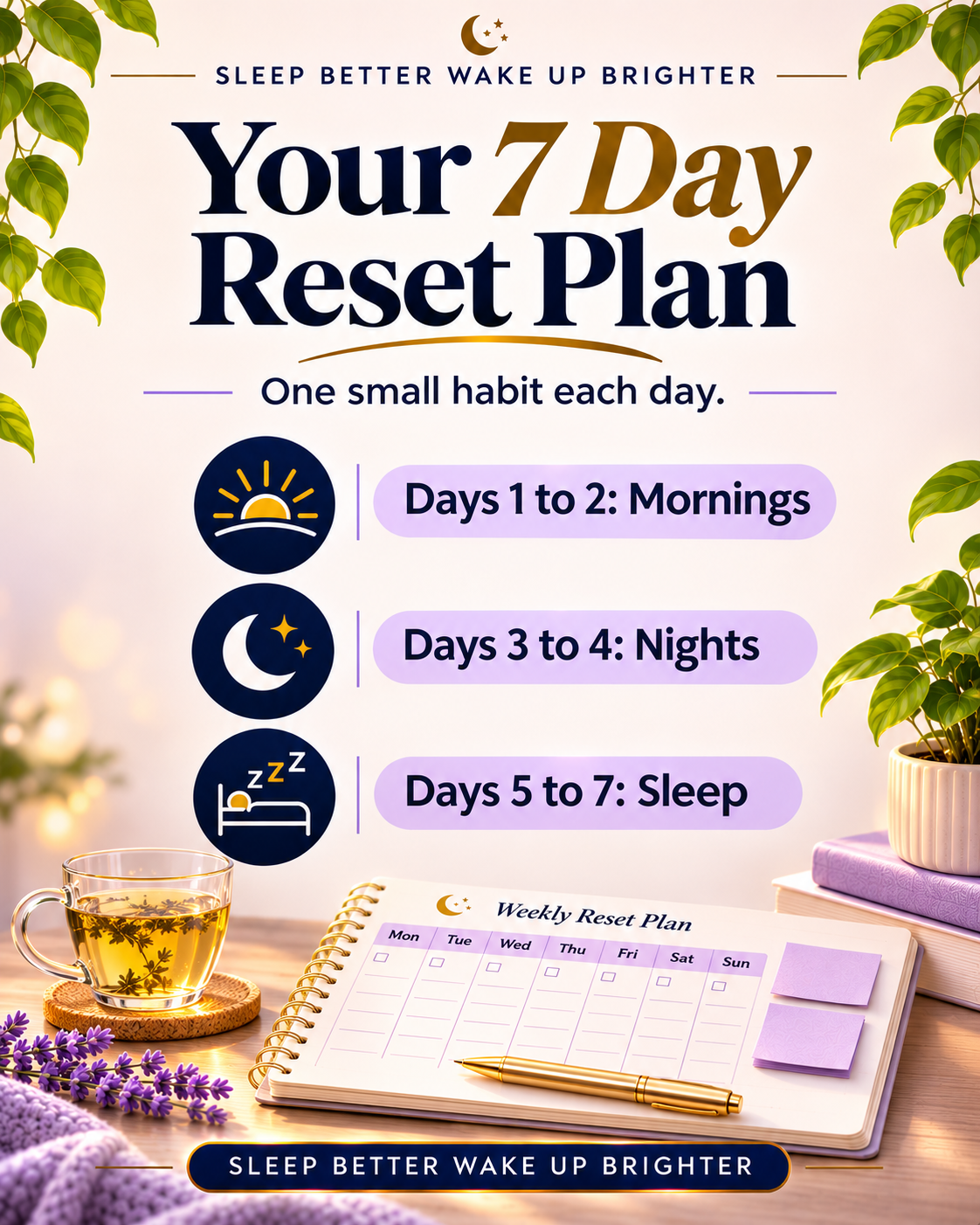
For a clear path, follow this simple 7 day plan. One little habit a day, so it’s not too much.
Table: 7 Day Plan to Wake Up Refreshed
| Day | New Habit | Window |
|---|---|---|
| Day 1 | Select one wake time for the 7 days | Morning |
| Day 2 | Open curtains or go outside within 30 minutes | Morning |
| Day 3 | No caffeine after 2:00 | Night |
| Day 4 | Phone charges out of the bedroom | Night |
| Day 5 | Set bedtime using the 90 minute table | Sleep |
| Day 6 | Make the bedroom cool, dark and quiet | Sleep |
| Day 7 | Review: how many mornings felt better? | All |
By the end of the week, most who follow this plan for waking up refreshed realize that it is no longer a struggle. After 2 to 4 weeks of consistent habits, if you still feel tired, it’s a good time to discuss with your doctor.
9. FAQ
How can I wake up refreshed after only 6 hours of sleep?
You can feel better by waking up at the end of a sleep cycle, and getting bright light and moving immediately. However, 6 hours is less than what most adults require (7 hours), so the long term solution is to go to bed earlier.
Why am I still tired after sleeping 8 hours?
You might still feel tired after sleeping 8 hours because your sleep is interrupted, your body clock is misaligned, you woke up during a deep sleep, you are stressed, or you have a health problem such as sleep apnea. If the tiredness persists for weeks, consult a doctor.
How can I get up in the morning feeling refreshed without coffee?
Have bright light, drink a glass of water and move for a few minutes. These three habits help you overcome sleep inertia, and you can have coffee later in the morning if you want to.
Should you hit the snooze button?
Snoozing isn’t a bad thing, but it’s not a good thing. It breaks your final sleep period into small chunks, and you end up more groggy than if you got up at the first alarm.
How many days before you feel refreshed when you wake up?
Within 1 to 2 weeks of a regular wake time and a quiet bedtime routine, most people will notice a change. Your body clock needs a few days to get used to it.
What time should you get up?
The ideal time to get out of bed is at the end of a sleep cycle, after at least 7 hours of sleep, and at the same time each day. It’s not about the exact time of day, but consistency.
Quick Summary
- There are three windows to consider when it comes to waking up refreshed: Night, Sleep and Morning.
- Feeling tired after 8 hours of sleep is usually related to quality, timing or stress.
- The normal morning grogginess lasts approximately 16 minutes.
- Schedule 5 to 6 sleep cycles of 90 minutes and keep one wake time each day.
- In your first 30 minutes, light, water and movement help you wake up refreshed.

Post Comment