Winding Down Routine: Your Calm 2026 Sleep Guide
Key Takeaways
- A winding down routine is a brief series of soothing activities that you perform in the same sequence each night before sleep.
- The Sleep Foundation recommends that you begin your routine 30 minutes to 2 hours before bedtime.
- A dim light, a cooler room and fewer screens help your body transition from busy to sleepy.
- In one study, people were able to fall asleep more quickly after making a quick to do list before going to bed.
- Consistency is important, not perfection: the same simple steps, night after night.
Introduction
It is 11 at night. The dishes are finished, there is peace in the house, and you go to bed. However, your brain is still operating at full throttle. You repeat a work discussion, you glance at your phone “just once” and an hour later you’re still awake.
Sound familiar? Your pillow and bed are typically not the issue. The issue is that you went to sleep directly after a hectic day without any transition. The bridge is a winding down routine.
A winding down routine helps your body and mind know that it’s time to end the day. Your brain starts to slow down a few hours before you go to sleep and a good routine just works with that.
In this guide you’ll learn:
- what a winding down routine means and why it is effective
- a straightforward 60 minute winding down routine that you can begin tonight
- the best and worst things to do before bed
- how to keep your bedtime routine for grown ups effective for good
This is the most thorough winding down process guide you will find for 2026, so let’s get calm and get started.
1. What Is a Winding Down Routine?
A winding down routine is a series of soothing, predictable activities that you perform in the final 30 to 60 minutes before going to sleep to prepare your body and mind for rest. Imagine that an airplane lands on a runway. A good pilot doesn’t let the plane fall from the sky. They lower it gradually, slowly, until the wheels gently touch the ground.
A bedtime routine is defined by the Sleep Foundation as a sequence of activities that you do in the same order every night for 30 to 60 minutes before you go to sleep. It is important to remember the “same order” part. After repetition, your brain associates the steps with sleep and eventually the first step alone will make you feel sleepy.

Is a wind down routine just for kids?
No, a wind down routine can be just as beneficial for adults. Parents tend to create bedtime routines for their children because it is so effective. Bath, PJs, story, lights off. The same signals are required for adults, but most of us have ceased to receive them once we reached adulthood and got busy.
What is the difference between a winding down routine and sleep hygiene?
Sleep hygiene is the term used to describe all of the things you do during the day that impact on your sleep, such as caffeine, exercise, and your bedroom environment. One part of sleep hygiene is a winding down routine, namely the final hour of your day. It’s the one you can do the most easily and it can have the greatest impact.
2. Why a Wind Down Routine for Sleep Works
A wind down routine for sleep is effective because it reduces stress, reduces bright light and provides a reliable signal for your brain. Here are the reasons why each of those is important.
Does a routine really help to soothe your body?
Yes, a calm routine is a way to get your body out of “busy mode.” Stress hormones, such as cortisol, help you stay alert during the day. Those levels lower when you have a relaxing routine, which helps you slow down your heart rate and relax your muscles. When you lie down, you are already halfway to sleep.
Why is it that light is so important at night?
Light is the most powerful cue that your body clock gets. Bright overhead lights and phone screens signal your brain that it’s still day, and can make it harder for your body to release melatonin, the hormone that induces sleepiness. One of the easiest ways to relax before sleep is to turn down the lights in your last hour.
Can training your brain be as easy as a habit?
Your brain can be trained with a simple habit that you repeat. When you drink the same caffeine free herbal tea and read the same type of book each night, your brain comes to understand that this is a cue for sleep. The routine slowly turns into a drowsy reminder over the course of a few weeks.
That’s why your winding down routine is so closely tied to the bigger sleep picture. For a full guide to making better mornings, read our main article on how to wake up refreshed.
3. The Soft Landing Method: A 60 Minute Wind Down Plan
The Soft Landing Method is a 60 minute winding down routine that is divided into three 20 minute blocks: Unplug, Unwind and Settle. Every block helps you to reduce your energy level a little, so you land in bed relaxed and calm.
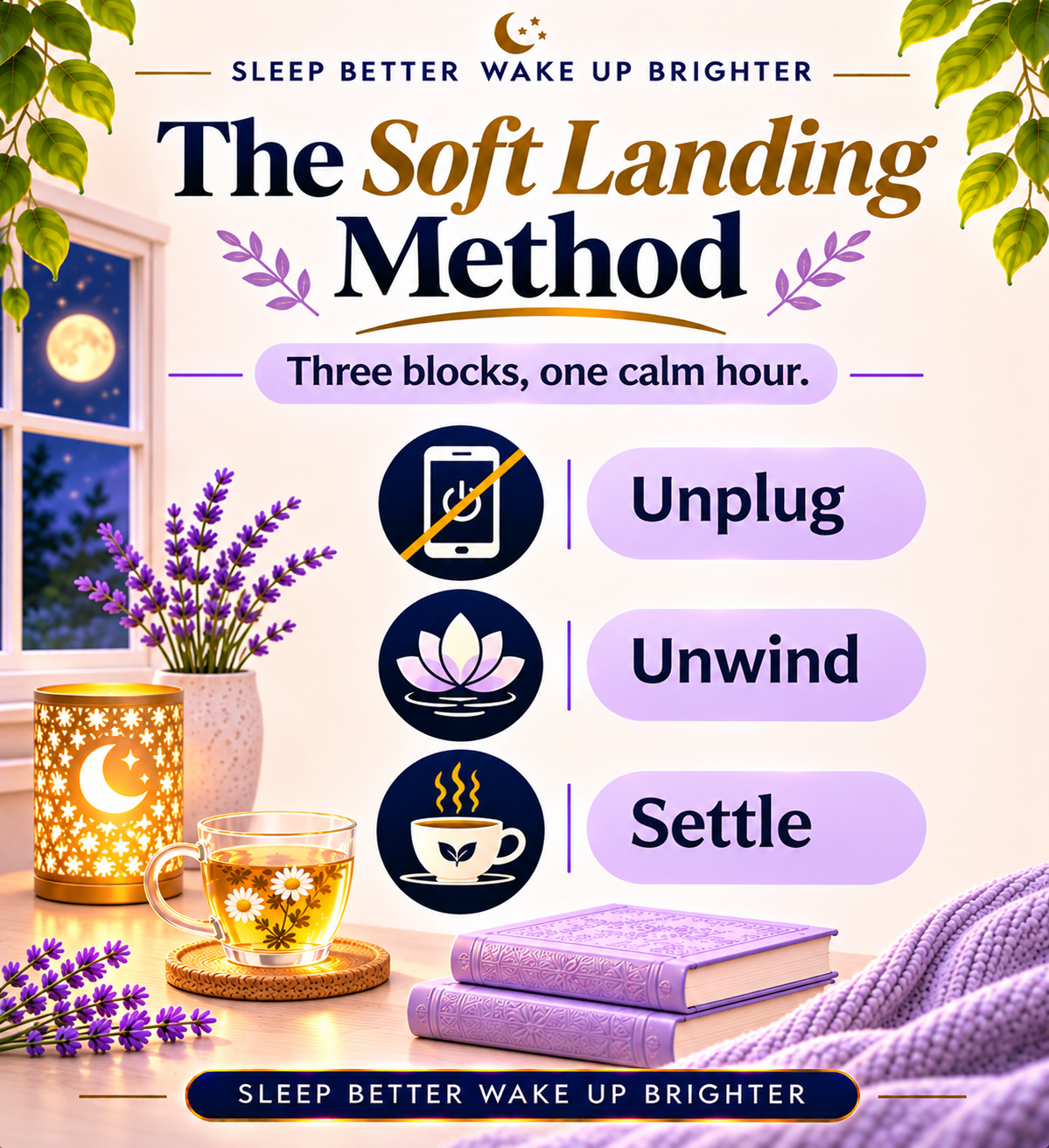
Here’s a step by step guide to creating your own wind down routine:
- Set your start time. Count back 60 minutes from your bedtime. If 10:30 is the time you want to be asleep, you need to start at 9:30. As a reminder, use a gentle alarm on your phone that is labeled “Wind down.”
- Unplug (minutes 60 to 40). Finish anything with a screen. Reply to your last message, plug your phone into a charger outside the bedroom, and dim the main lights in your home.
- Brain dump. Take five minutes to write tomorrow’s to do list on paper. One study found that writing a quick to do list before bed helped people fall asleep faster. It moves the worries out of your head and onto the page.

- Unwind (minutes 40 to 20). Do something slow and pleasant. A warm shower, gentle stretching, washing your face slowly or tidying one small space are all good choices.
- Settle (the last 20 minutes). Get into bed with soft light only. Read a paper book, listen to calm audio, or practice slow breathing.
- Lights out at the same time. Turn off the lamp at your planned bedtime, even if you do not feel perfectly sleepy. Your body clock loves a steady schedule.
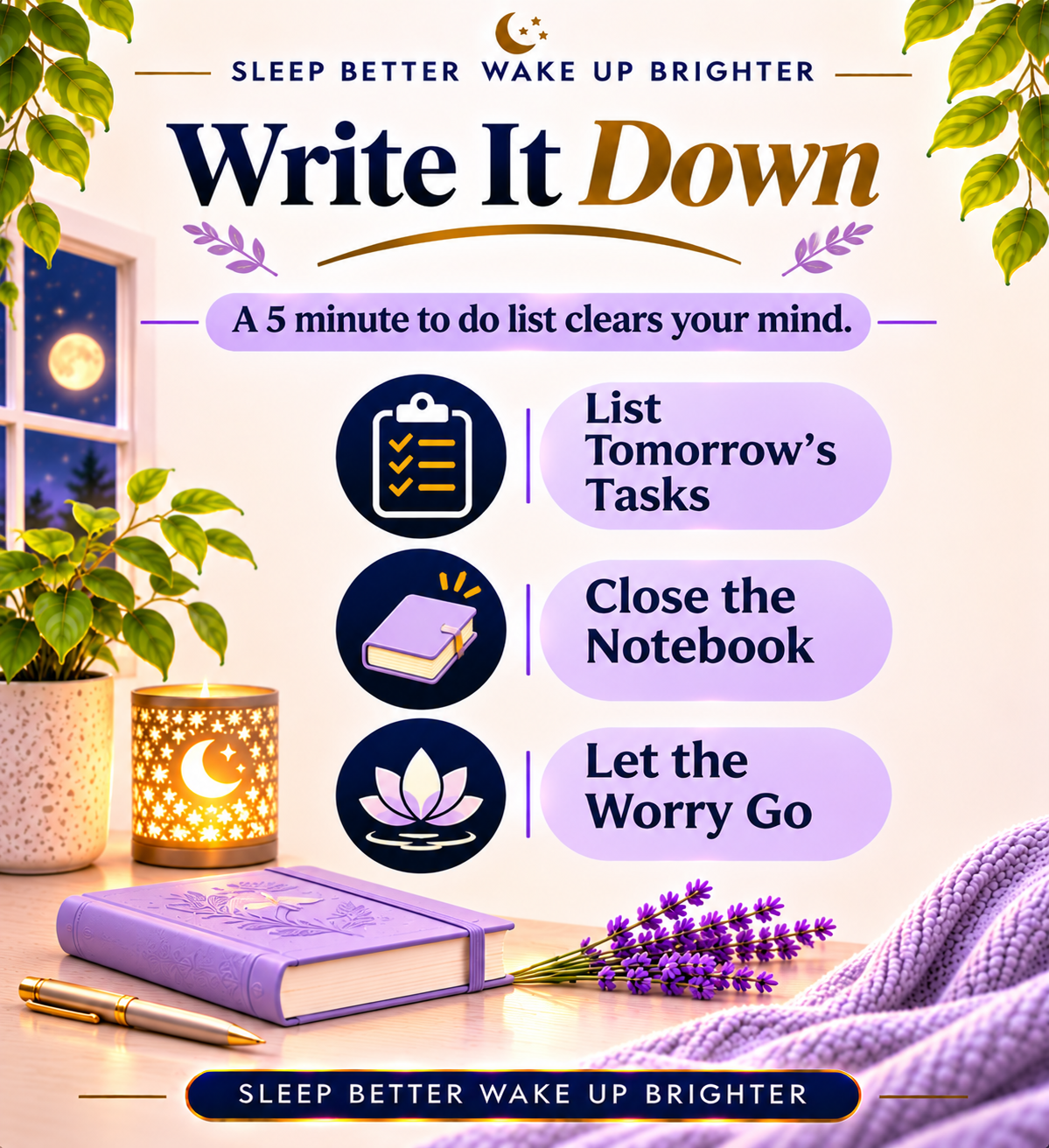
Table: The Soft Landing Method at a Glance
| Block | Time Before Bed | What to Do | Why It Helps |
|---|---|---|---|
| Unplug | 60 to 40 minutes | Screens off, phone out, lights dim | Lets melatonin rise |
| Unwind | 40 to 20 minutes | Warm shower, stretch, to do list | Reduces stress and body tension |
| Settle | 20 to 0 minutes | Read, breathe, soft lamp only | Gives your brain a calm last signal |
4. Best Activities to Wind Down Before Bed
Calm, low light and screen free are the best ways to wind down before bed. These are the activities with the most support behind them.

The 6 top activities for a winding down routine are:
- Reading a paper book: a randomized controlled trial tested whether reading a book in bed before sleep would improve sleep quality, and it did.
- Warm shower or bath: warming your body and then cooling down afterward can help many people fall asleep more quickly.
- Gentle stretching: a few simple stretches will loosen tight muscles and can help prevent night cramps.
- Making a to do list or a brief journal: it gets rid of racing thoughts.
- Slow breathing: breathe in for 4 counts and out for 6 counts to let your body know that it is safe to rest.
- A relaxed skincare routine: taking the time to do it slowly makes it a relaxing ritual.
What is the best thing to drink before going to sleep at night?
The best drink before bed is something warm and caffeine free, like a mild herbal tea or warm milk. Make it small, as you don’t want to wake up at night to use the bathroom.
Can I listen to something while I’m in bed?
Yes, there is no problem with calm audio for most people. A calming sound, a gentle story or white noise can be helpful. Simply let it turn off automatically, and leave the screen dark.
5. What to Avoid in Your Evening Wind Down Routine
The top four things to stay away from when winding down in the evening are bright screens, heavy food, caffeine and stressful activities. These destroy all your calm.

Table: Wind Down Helpers vs. Wind Down Breakers
| Helps You Wind Down | Breaks Your Wind Down |
|---|---|
| Dim lamps and warm light | Bright ceiling lights |
| A paper book | Scrolling social media |
| Herbal tea | Coffee, cola or energy drinks |
| A light snack if hungry | A large late dinner |
| Planning tomorrow’s list | Responding to work emails |
| One bedtime each night | A different bedtime each night |
Why is it bad to scroll in bed?
Scrolling in bed is bad because it combines bright light with a constant stream of new information. Your brain remains vigilant and the “one more video” habit can quietly take an hour of sleep.
Should you work out at night?
At night, it is okay to move gently, such as stretching or walking slowly. Hard workouts are better earlier in the day, because they raise your heart rate and body temperature right when you want them to fall.
6. How to Make a Bedtime Routine for Adults Stick
A bedtime routine for adults works best if it is brief, achievable and done at the same time each night. There’s no need to have a flawless routine. You must have one that you can actually do.
How much time should be spent on a wind down?
A wind down routine can be anywhere from 30 minutes to 2 hours. If an hour is too much, begin with 20 minutes and gradually increase. A short routine you stick to each night is better than a long routine that you don’t do.
What if my schedule changes daily?
When your schedule changes, don’t alter the order of your steps even if the time changes. The order is the signal your brain learns. When it’s a busy night, do a “mini routine”: turn the lights down, write your list and read for 5 minutes.
How can I stop skipping my routine?
Make the first step small and automatic. For instance, plug your phone in outside the bedroom when your “Wind down” alarm goes off. After the first step, the rest will come easily.
Your evening is just one component of your sleep. If you want to know why it’s so important to go to bed at the same time, read our article on how to reset my circadian rhythm. To see what your night looks like on a tracker, read our article about the normal sleep cycle graph on Apple Watch.
Five points to keep in mind:
- “Sleep does not begin in bed. It begins an hour before.”
- “Your brain learns from repetition, not from willpower.”
- “When the lights are dim, the body is dim.”
- “A short routine you keep is better than a perfect routine you don’t do.”
- “Write the worry down, let the pillow have your head.”
7. FAQ
How long should a wind down be?
A good wind down period is 30 to 60 minutes before bedtime. If it is new to you, begin with 30 minutes.
What should be in a wind down routine for sleep?
A wind down routine for sleep should include low lighting, no screens, one quiet activity (like reading), and the same bedtime every night.
What are some ways to wind down at night when you have a busy mind?
Write it all down and then take a few minutes to do slow breathing. Writing down thoughts helps them to break the loop.
Can a winding down routine help with insomnia?
Many people fall asleep quicker with a winding down routine, and for some insomnia treatments, relaxing before bed is an integral part of the process. If you are having trouble sleeping for weeks, consult a doctor.
Is it wrong to go to sleep with the TV on?
The TV should be turned off. Even if you don’t notice the light and sound, it can interfere with your sleep later in the night.
Quick Summary
- A winding down routine is a series of calming activities you do in the final 30 to 60 minutes before sleep.
- Follow the Soft Landing Method: Unplug, Unwind, Settle.
- Dim lights, put your phone away and write tomorrow’s list.
- Instead of scrolling, read a paper book or take a warm shower.
- Do the same sequence each night and the brain will get the signal.

Post Comment